AGAIN. I see nothing about this side of the country on this site. PLEASE. Send as much as you can manage their way – support, money, whatever you can.
My hometown (Balikpapan) was literally accros the sea from this city. when this happened, some of my friends told me they could actually feel the earthquack from there.
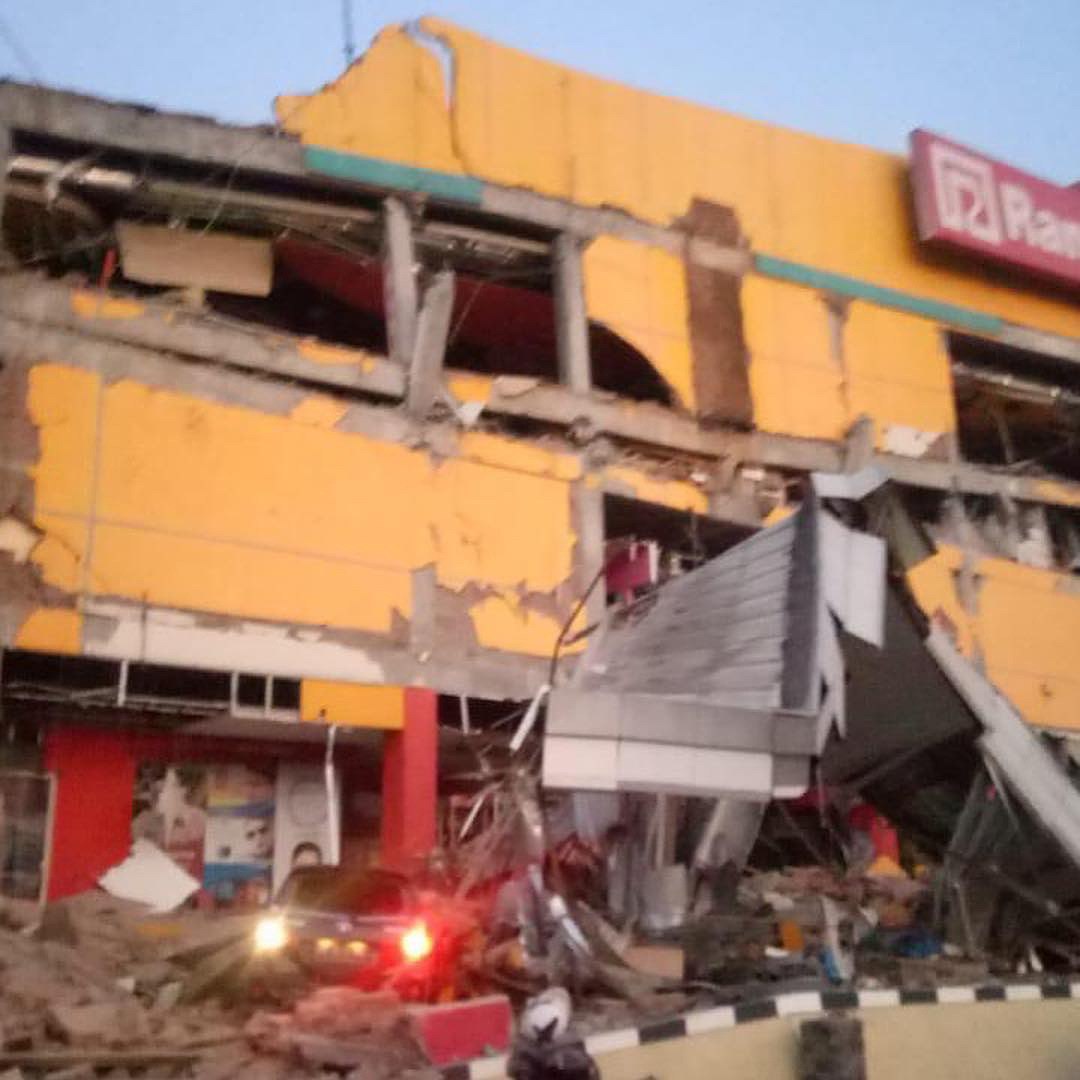
It was started with 7,7 magnitude earthquack and continued with a 10-18 Feet tsunami. So far it’s been reported that 384 died and 540 Injured, research still continues.
My sympathy goes to the people from Palu, Danggola & Mamuju, especially to the families of those who have lost their lives, to the injured and to all who have been affected by this terrible disaster
By Ainur Rohmah and Shibani Mahtani, September 29, 2018
JAKARTA–Just 34 minutes after Indonesia was hit by another
major earthquake, officials called off a tsunami warning. Aid agencies and
others–still dealing with the aftermath of a devastating quake in August–breathed
a sigh of relief.
What they didn’t know was that, just about that same time, a
10-foot wall of seawater was tearing through the city of Palu and other areas
Friday on an island in the center of the vast Indonesian archipelago.
Amid the roar of onrushing sea and terrified cries for help,
the tsunami tore homes off their foundations, snapped palm trees and dragged
away victims–some preparing for a beach festival at dusk on Friday. Bodies
were later left on the sand as the waters receded, and some were dragged out to
sea.
More than 420 died in Palu alone, officials said Saturday as
they began to take stock of the devastation and count the dead amid fears the
tally could rise significantly from the 7.5 magnitude quake and the tsunami
that churned over parts of Sulawesi, about 800 miles northwest of Jakarta.
Indonesian Vice President Jusuf Kalla, in an interview with
local media, said the death toll could reach well into the thousands.
Among the dead was a young Indonesian air traffic controller
who stayed at his post when the earthquake hit to ensure that a plane carrying
hundreds of passengers took off safely. He jumped from the tower and died
before a medical helicopter could reach him.
Elsewhere, rescue teams confronted washed out roads and
bridges as they tried to reach another city, Donggala, and other areas
completely cut off by the quake and tsunami.
Indonesian officials also may face another reckoning over
why the tsunami alerts were pulled even as a disaster was roaring ashore,
raising questions about the level of monitoring and post-quake analysis in a
nation along some of the world’s most active fault lines.
“People were still going about their activities on the beach
and did not immediately run,” said Sutopo Purwo Nugroho, spokesman for
Indonesia’s National Disaster Management Agency, who said that hundreds were
gathered in Palu for a beach party. The number of deaths, he said, will “continue
to rise as the search continues.”
Indonesian officials and aid agencies struggled with
battered communications, destroyed roads and landslides. Even aid deliveries by
sea have been a challenge, as Palu’s port was badly damaged by the tsunami.
The second badly hit city, Donggala, remained inaccessible
after a main bridge collapsed.
“We’re now getting limited communications about the
destruction in Palu city, but we have heard nothing from Donggala, and this is
extremely worrying,” the Red Cross said in a statement. “There are more than
300,000 people living there. This is already a tragedy, but it could get much
worse.”
Rescue officials will now have to deal with the impact of
the second major earthquake in Indonesia in two months.
In August, a 6.9-magnitude earthquake and a series of strong
aftershocks hit the island of Lombok, south of Sulawesi, killing more than 450
people. World Vision, a relief agency, planned to send assessment teams to Palu
that were expected to reach the city Sunday. But the organization still had
many of its staff members in Lombok responding to the destruction and
widespread loss of homes there.
Indonesia is prone to earthquakes because of its location on
the “Ring of Fire,” an arc of volcanoes and fault lines in the Pacific Basin.


 Backup Tumblr Blog