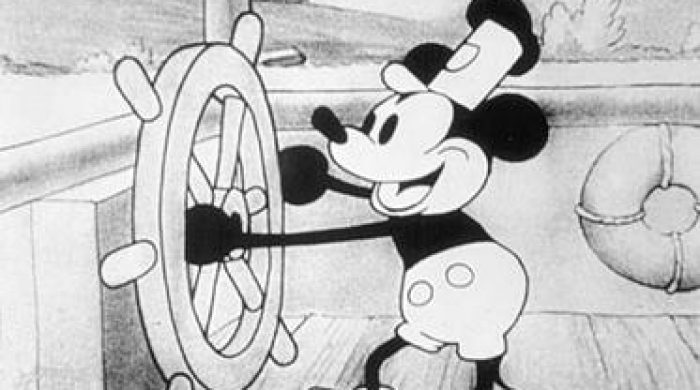
On November 18, 1928, Steamboat Willie premiered in Universal’s Colony Theater. Important for a number of reasons, Steamboat Willie was the first Disney animated cartoon to have fully synchronized pictures and sound. It was also the first premiered cartoon to feature the iconic Mickey Mouse. The popularity of this short-film would become the foundation of the legacy of Disney movies and the Walt Disney franchise that has become famous throughout the world.
Mickey’s turning 90 tomorrow, so what better way to celebrate…than to give his older brother some attention cause clearly no one else will
Oswald is one of my favorite cartoon characters, so I wanna take this moment to focus the spotlight on him for a bit.
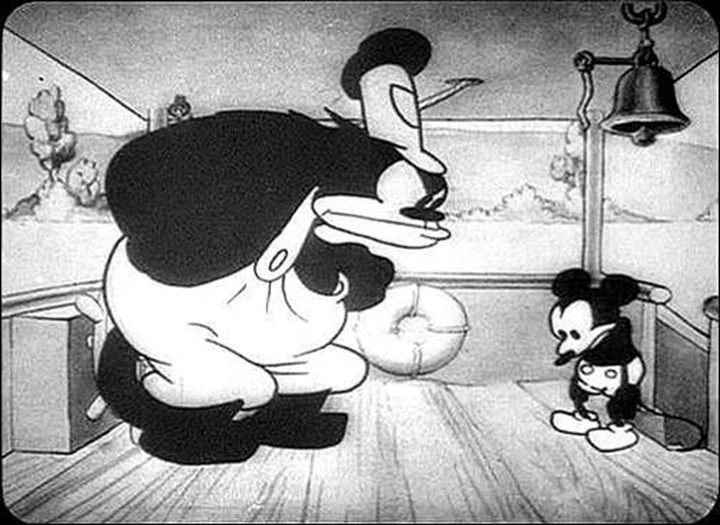
Oswald is one year older than Mickey, making his debut in 1927 (he is not, however, Disney’s oldest reoccurring character, that title goes to Pete, surprisingly, who predates both Oswald and Mickey)
Oswald has made a handful of cameos since he appeared in the Epic Mickey Games. He pops up for a second in “Get a Horse!” and is the butt of a rather mean gag in the Mickey Mouse Short “Canned”
If you’re familiar with Epic Mickey, you know Oswald’s girl is Ortensia. However, this was not originally her name. Her name was Sadie, but the game developers wanted to give her an “O” name to match Oswald (like Mickey and Minnie, and Donald and Daisy) and it’s stuck ever since
Speaking of Oswald’s girlfriend, Ortensia was not his first. In the older Oswald shorts, he’s infatuated with a female rabbit named Fanny (I like to think Oswald had his 420 children with her, but when he hooked up with Ortensia, she adopted all of them)
Oh, Oswald has 420 Bunny children.
Charles Muntz, the antagonist of the Pixar film Up, isnamed after Charles Mintz, the person responsible for taking Oswald and several of Walt’s animators away after a contract dispute in 1928
Out of the 27 Oswald cartoons made by Disney and Iwerks, 13 are available in the Walt Disney Treasures collection, 2 are available in Walt Disney Signature Blu-rays as bonus features, 5 are found but are not currently available to the public, and 6 are still lost.
After Oswald went to Universal, he got several voice actors, including Mickey Rooney, June Foray, and Mel Blanc. Currently, he’s voiced by veteran voice actor Frank Welker (known for voicing Fred from Scooby Doo among others)
In order for Disney to get the rights to Oswald from Universal, the company traded a sportscaster from ABC
In the Disney Parks, Oswald has a service station on Buena Vista Street in California Adventure
And that’s all I got. I love this bunny, and I wish he got more credit for laying the groundwork for Mickey. Without him, I don’t think Mickey would be as popular as he is today.
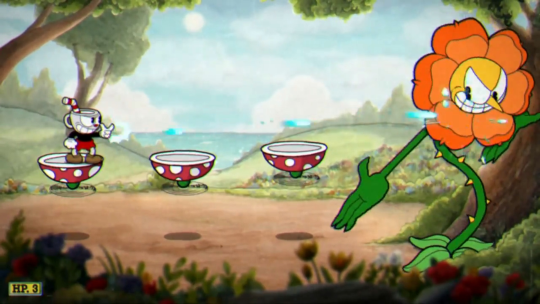
Hey guys! So recently as I’m sure a lot of you know, the 1930s style of animation has made a resurgence in the forms of Bendy and the Ink Machine and Cuphead! So I’m just making this to show where it comes from c:
Before you start though, I’ll be mentioning Max Fleischer in this post, and you can find out more about his life in the book Out of the Inkwell. I don’t have it myself as I’m pretty poor, but I’d love to read it soon ❤
Was It Walt Disney?
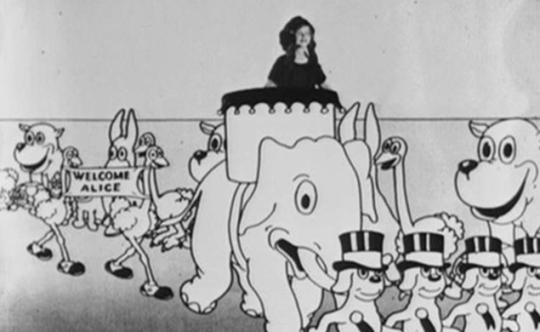
It depends on what kind of style you’re thinking! Walt Disney’s work began with an animation known as Alice’s Wonderland (1923).
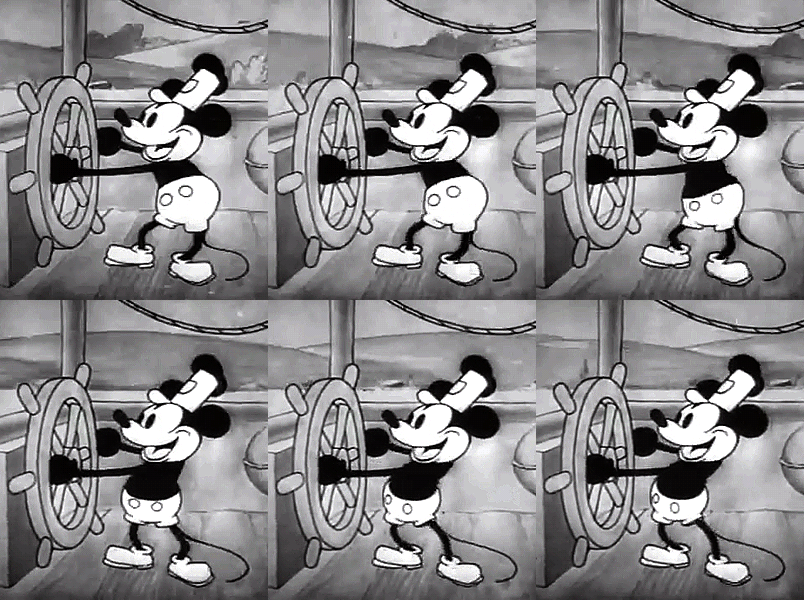
which, looking onto his future works, is a lot more different. The cartoon look is there; however, those famed Pac-Man eyes aren’t, neither are the rubberhose limbs and thick black characters. Those came into his work later on with his Mickey Mouse shorts such asPlane Crazy (1928) and the first animation to feature synchronized sound,Steamboat Willie (1928). The bouncy animation is there, squashing and stretching all the characters and objects!
Though, Steamboat Willie was actually not the first animation to feature Synchronized sound! That would be credited to “Oh, Mabel, Mother, Pin a Rose on Me” (1924)(Which I actually can’t find…Here’s the song though!) and later on, My Ole Kentucky Home (1926).
There is a lot of…Drama….surrounding the relationship between the studios of Disney and Fleischer, but this isn’t going to be about that (though I may touch on it), I would definitely recommend looking it up though, it’s very fascinating.
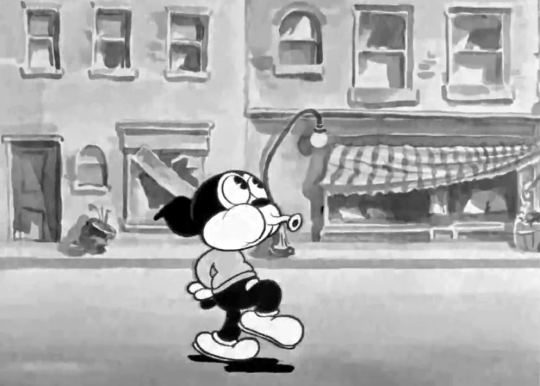
Around this time, the scary looking Lip-Sync animation started to come along and the styles were fairly similar, though the Fleischer Car-Tunes were a lot more, in my opinion, clean, however didn’t fully stretch their characters as much as Disney had been doing later on.
Who are Fleischer Studios?
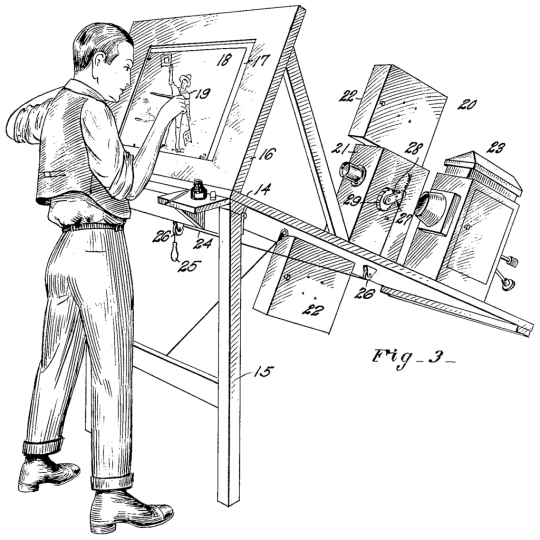
Fleischer Studios first opened around the 1920s as Inkwell Studios. It was created by brothers Max and Dave Fleischer, whom were Born and Raised in Poland. In 1914, Max Fleischer created the Rotoscope, a device that could allow the animator to create smoother productions as they had been drawn over Filmed reference.
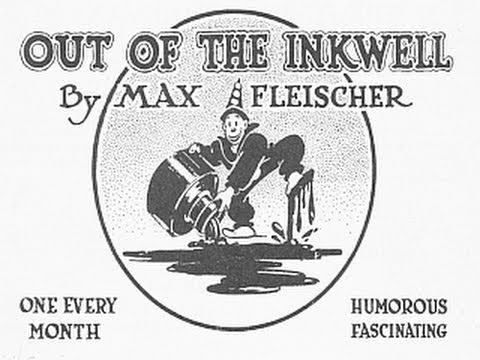
Using this Process, they created the Out of the Inkwell (1918 – 1929) series, starring Koko the Clown!
Max included a lot more Live Action in his animations than Walt Disney and even revolutionised the way it worked due to his own inventions, including The Stereoptical Process (which I’ll show more on later), that gave him a good edge forwards during their prime. However, due to A Series of Not Quite Fortunate Events, he never quite overcame Disney and, unfortunately, his studio met a sad end.
What other Cartoons did they make?
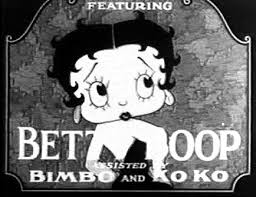
Fleischer Studios made a surprising turn with bringing in Less Live action footage over time and creating more Lovable characters such as Bimbo The Dog and Betty Boop (1931). (Betty Boop being another can of worms entirely with the problems her design created and the blow it dealt the studio)
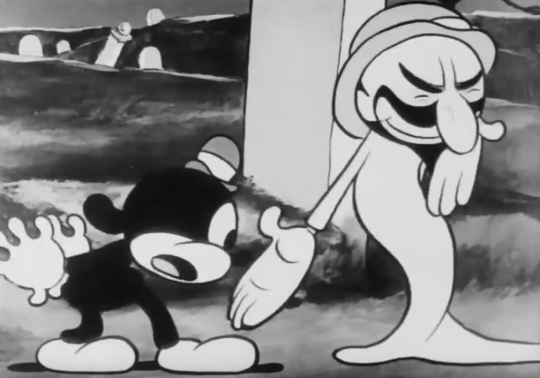
It was around this time that people could start to notice the style’s true beginnings. The famed Eyes had begun to appear, the Clearly Animated Flat props and characters over the detailed painted environments, and the rubberhose stretchiness of their movements.
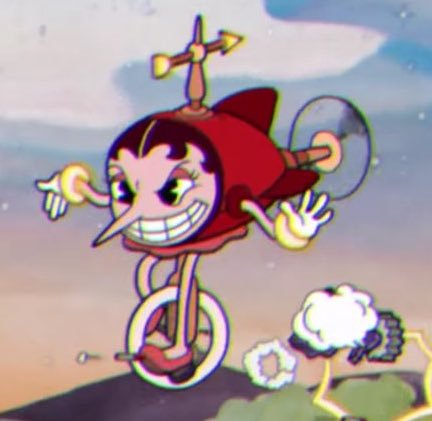
Bringing in Cuphead as reference, both Hilda Berg and Cala Maria were heavily inspired by Betty boop’s design as mentioned by Studio MDHR’s Jake Clark in their GDC (Game Developer Conference) talk, which I’d definitely recommend watching.
Besides these characters, perhaps one of their other most Well known characters wasPopeye the sailor man! featuring Sinbad, a character I’m fairly sure inspired the design of Cuphead’s Captain Brinybeard.
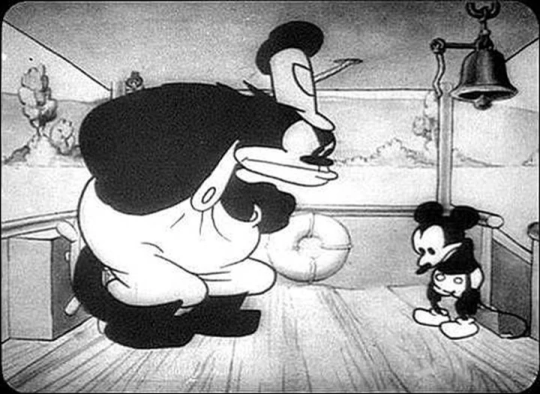
In this animation you can see every part of the style’s inspiration. The watercolour backgrounds, the flat Cel characters and their stretchy, rubbery movements, and, shown in the image above, the Two-Tone Technicolor process (A secret in Cuphead for those who don’t know). This was another issue between Disney and Fleischer, as well as their own Financial problems with Paramount Pictures, so they had to resort to using cheaper methods, resulting in the above image being created by layering a negative-spaced film reel through red and green filters (basically, it was complicated back in the day, no easy layers then).
I’d definitely recommend looking up more Fleischer cartoons too if you’d like inspirations for your own works or for the animation practise, such as Swing you Sinners(1930) which I honestly think is one of the biggest influences in terms of the recent style too!
Why does Disney have this style in their animations now?
Honestly I couldn’t tell you that myself, as personally I myself am not really a huge Disney fan. Considering his past with the studios he worked in or rivalled, I never really had a soft spot for him. However, I like to hope that he took inspiration from Max Fleischer. Max was unfortunately met with the worst circumstances with working under Paramount Pictures, The Great Depression hugely hitting his work, and his relationship with his brother Dave deteriorating. (honestly I wish this studio was still here and Paramount not).
You could say the style was stolen, or developed, or inspired, being shown in Mickey Mouse’s more updated designs as well as just a general staple of “Old Animation” with the eyes and Thick Black characters. Either way, it’s the fact Fleischer inspired generations with the little miracles he created that is the important thing. I wish people would stop attributing these qualities initially refined by Fleischer to Walt Disney and giving him more credit than he deserves, but that’s just my own opinion.
Should we keep making animation in this style, or move on?
Please keep making things in the old rubberhose animation styles. Yes it’s an old aesthetic and yes it’s not…the best out there, but it’s an incredibly endearing look that I think is a love letter to the old days of animation.
You will get those who pick at the details of how it doesn’t fit quite with the style (With Bendy being a victim, his proportions and shapes being very inaccurate if put into the Fleischer/Old Disney style), however, it’s how you bring that style and adapt it to the modern world, how you make it so that you’re not merely just going by the original rules of how you create these characters and worlds. Yes, Cuphead strictly stuck to these details as beautifully as possible, but Bendy was, though I’m not a fan of his design myself, a great addition and evolution of the style into the modern day.
As nice as it is to remember these styles for when they came from and what they were inspired by, it’s always nice to know it’s just that, a style. You can continue to create in that style as much as you want!
However, if you ever want to say/credit where the style came from, though Disney did create a style similar to this and adapted some of its individual aspects into their work later on after, the Vast majority of it comes from Fleischer Studios. It’s a common misconception, but an understandable one considering the studio no longer exists and how popular Disney is.
If you ever have more questions about it, go ahead and ask! I’d love to research more about animation and give you information on any specifics within the studio, the troubles they faced within themselves/with eachother or other studios that were present back then 😀 ❤





 Backup Tumblr Blog